


Update
More Super Supernovae | Update 20.6
Mar 15th
Run Steam to download Update 20.6, or buy Universe Sandbox ² via our website or the Steam Store.
April 19: Update 20.6.3 is a small update with a few bug fixes for issues with object selection, internal analytics, and database object information.
This is another small update, but we want to highlight how awesome our new supernovae look now. Thanks to our graphics developer, Georg, for all of his wizardry involved in making these look even cooler, all the while making them perform better, too.
This update also includes a number of smaller improvements, including improved trails in the Roadster sims.
Check out the full list of What’s New in Update 20.6
Now back to our work on lasers and Planet Grids for Update 21! Learn more about what we’re working on for our next big update
They Put a Car in Space, We Upgraded Our Engine | Update 20.5
Mar 7th
Run Steam to download Update 20.5, or buy Universe Sandbox ² via our website or the Steam Store.
March 14: Update 20.5.2 is a small update that fixes a few bugs, including problems with volume settings and camera control.
Update 20.5 features:
- A Tesla Roadster in Space
- The Ultimate Engineered System
- An Upgrade of Our Game Engine to Unity 2017.2
This is a small update in terms of content, but there have been some significant under-the-hood changes with the upgrade of our game engine to Unity 2017.2. As with past under-the-hood changes, it’s a sign we’ve transitioned well if you can’t see any differences.
But also: there’s a car in space! (And conversely, this car doesn’t even have an engine under its hood.) On February 6, 2018, SpaceX performed a successful test launch of their Falcon Heavy rocket, the most powerful rocket currently in use. The launch was intended as a demonstration of the Falcon Heavy’s ability to launch a payload into an orbit that could reach Mars. SpaceX also successfully landed two of the Falcon Heavy’s reusable booster engines, although the central core crashed during its attempted landing.
As part of the test, the Falcon Heavy rocket carried a dummy payload to demonstrate that it could launch a large mass onto the required orbit. For this launch, SpaceX chose an unusual dummy payload: a Tesla Roadster electric car belonging to SpaceX and Tesla CEO Elon Musk. In a press statement released before the launch, SpaceX explained that it wanted a payload that was “fun and without irreplaceable sentimental value.” While the Roadster will not land on or orbit Mars, its current elliptic orbit around the Sun will take it beyond the orbit of Mars at its farthest point.
Check out the Roadster sims in Universe Sandbox ²:
- Home > Open > Tesla Roadster in Space
- Home > Open > Where in Space is the Tesla Roadster
Update 20.5 also includes a database refresh for objects in our Solar System, a few other new sims (including the Ultimate Engineered System), improved supernova visuals, and a number of smaller improvements and bug fixes.
Check out the full list of What’s New in Update 20.5
We are making great progress on Update 21, but we unfortunately can’t provide a release date yet. Update 20.5 is just a step on the way to make sure everything is running smoothly. Thank you for your patience while we continue to work on Planet Grids and Lasers.
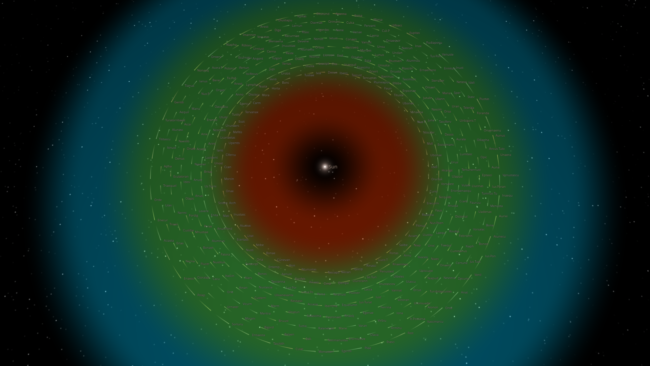
The Ultimate Engineered System, as described by astronomer Sean Raymond
Scales & Scholars | Update 20.4
Dec 21st
Run Steam to download Update 20.4, or buy Universe Sandbox ² via our website or the Steam Store.
Update 20.4 features five new simulations:
- Check out our Solar System in its current state in real time
- Cram all of the planets between the Earth and Moon (see clip above)
- See the asteroid Apophis’s close call with our planet in 2029
- Spend some time with Earth’s companion, 2016 HO3
- Explore the scale of the planets in our Solar System
This update also features tons of new descriptions so you can learn more about the astronomy, physics, and history of the simulations. There is also a new texture for the minor planet Vesta.
Check out the full list of What’s New in Update 20.4.
We are still hard at work on our next big release, Update 21. Stay tuned after the New Year for more information.
Happy Holidays!
Oculus Store Launch | Update 20.3.1
Dec 7th
Universe Sandbox ² is now officially available on the Oculus Store!
And to celebrate, we are 15% off: Universe Sandbox ² on Oculus Store
If you’re a Rift user already, you should see some big performance boosts in VR, thanks to the added support for the Oculus technology in this update. Oculus technology features their Asynchronous Spacewarp, which helps keep the visuals and tracking feeling smooth, even when there’s a dip in performance.
This update also includes a number of smaller improvements and bug fixes. Check out the full list of What’s New in Update 20.3.1.
Special thanks to our VR developer, Jacob, for making all of this possible!
Follow @universesandbox
A New Exoplanet & Interstellar Messenger | Update 20.3
Nov 21st
Run Steam to download Update 20.3, or buy Universe Sandbox ² via our website or the Steam Store.
Update 20.3 features two new simulations for the recently discovered exoplanet, Ross 128 b, and the first observed interstellar visitor, ‘Oumuamua. This update also includes a number of smaller improvements and bug fixes.
Ross 128 b
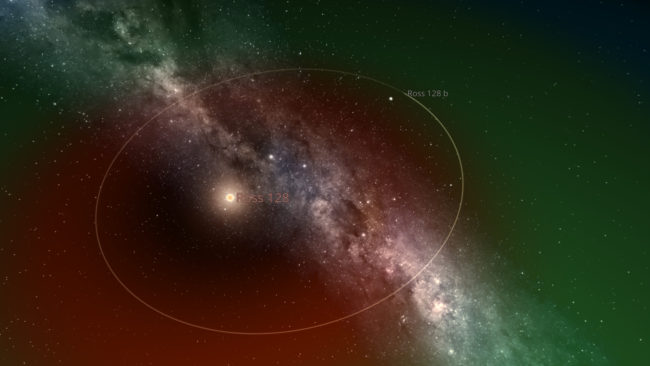
On November 15, 2017 astronomers with the European Southern Observatory (ESO) discovered Ross 128 b, a potentially habitable, Earth-sized exoplanet orbiting a red dwarf star 11 light years away.
Though Ross 128 b is farther than the closest temperate planet, Proxima b, it orbits a “quieter” red dwarf that emits far less deadly ultraviolet and X-ray radiation. This makes it a much better candidate for habitability.
See Ross 128 b in Universe Sandbox ²:
Home > Open > Ross 128 with Earth-sized Planet
‘Oumuamua
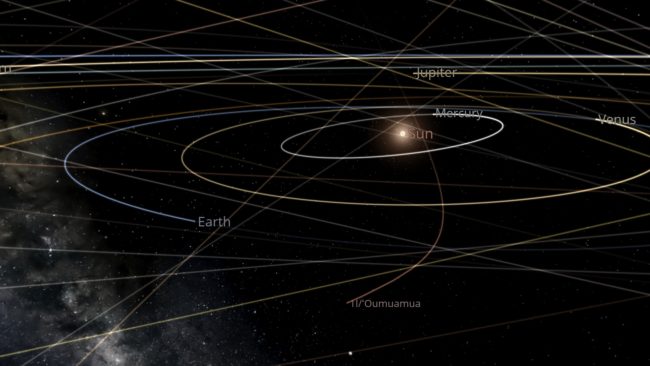
On October 19, 2017, astronomers in Hawaii observed an asteroid soaring past Earth. Analysis of its trajectory revealed that it is the first interstellar object ever observed in our solar system. Nicknamed ‘Oumuamua, meaning “a messenger from afar arriving first,” the asteroid carries the story of a distant star system born a long time ago.
Learn more about ‘Oumuamua on NASA’s website.
See ‘Oumuamua in Universe Sandbox ²:
Home > Open > Oumuamua in 2017
Check out the full list of What’s New in Update 20.3.
Ciao, Cassini | Update 20.2
Sep 14th

Run Steam to download Update 20.2, or buy Universe Sandbox ² via our website or the Steam Store.
November 3: Updates 20.2.3 and 20.2.4 are small updates which add two sims from the latest Vsauce video as well as a few improvements and bug fixes.
November 2: Update 20.2.2 is a minor update which includes a number of improvements and bug fixes.
October 5: Update 20.2.1 a minor update which adds a Cassini spacecraft model, Quicksave & Quickload (F5 & F9), and a number of smaller improvements and fixes.
On September 15, 2017, the world says goodbye to the Cassini spacecraft as it ends its historic mission with a final plunge into Saturn.
During its 13 years orbiting Saturn, Cassini made a number of invaluable discoveries about the planet, its rings, and its moons.
We now know that massive geysers covering the south polar region of the moon Enceladus shoot icy particles into space, forming most of Saturn’s E-ring and hinting at a massive, subsurface ocean. And we now know that the surface of Titan, Saturn’s biggest moon, shares a surprising number of characteristics with Earth, including dunes, mountain ranges, rivers, lakes, and seas.
With its array of sophisticated instruments, Cassini watched as storms raged on Saturn and seasons changed. It discovered eight new moons, provided insight into the behavior of its famous rings, and completely changed our understanding of its magnetosphere. The mission has been extended twice and now Cassini has been in orbit nine years longer than originally intended. Its fuel is nearly gone and so, to prevent possible contamination of any of the moons, its course has intentionally been set for disintegration in Saturn’s atmosphere.
So now we say ciao, Cassini. Thanks for all of your work.
And thanks to all of the hard-working scientists from NASA, the European Space Agency, and the Italian Space Agency who made the Cassini mission possible.
See Cassini’s final hours in Universe Sandbox ²
Home > Open > Core/Historical > Cassini collision with Saturn on September 15, 2017
Home > Tutorials > Science > What Is Cassini’s Grand Finale?
This update also includes a number of smaller improvements and bug fixes.
Check out the full list of What’s New.
For the latest Universe Sandbox ² news, follow us on Twitter and Facebook.
Total Solar Eclipse | Update 20.1
Aug 14th
August 28: Update 20.1.3 is a small update that adds a number of bug fixes and small improvements.
A solar eclipse occurs when the Moon passes between the Sun and the Earth, and partially or fully blocks the disk of the Sun. When it completely blocks the Sun, it is a total solar eclipse.
Total solar eclipses are rare events, happening about once every 18 months. But the opportunity to view them is even more rare; there is only a very narrow path across Earth from which they can be viewed.
On August 21, 2017, the continental United States will witness its first total solar eclipse in 38 years. Parts of 14 different states, from Lincoln City, Oregon to Charleston, South Carolina, will go dark as the Moon’s shadow passes over them.
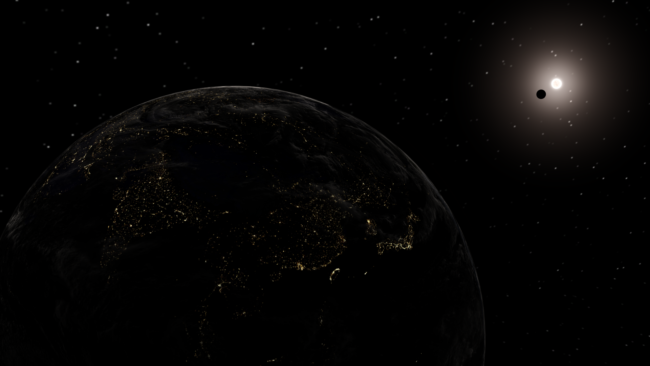
View the solar eclipse in Universe Sandbox ²:
Home > Open > Total Solar Eclipse on August 21, 2017
Home > Open > Total Solar Eclipse on August 21, 2017 – Close Up
Main Menu > August Eclipse (VR)
This update also includes a number of smaller improvements and bug fixes.
Check out the full list of What’s New.
For the latest Universe Sandbox ² news, follow us on Twitter and Facebook.
A New Foundation & VR 2.0 | Update 20 | Now Available
Jun 22nd
Run Steam to get Update 20, or buy Universe Sandbox ² via our website or the Steam Store.
This is an update for both the desktop and VR versions of Universe Sandbox ².
August 04: Update 20.0.16 is a small update with minor improvements and bug fixes.
A New Foundation
Imagine Universe Sandbox ² is a house that we’re building, and each update adds something new. Many of our updates so far have made fancy, noticeable additions to the house — a garage, a balcony, a new roof with some nice solar panels, etc. But with Update 20, we’ve completely lifted the house and made some major renovations to the foundation.
This means that there may not be many obviously big changes (unless you’re in VR! see below), but we’ve done considerable behind-the-scenes work. How much is “considerable,” you ask? In our task management system, we’ve closed over 560 tasks. That’s a lot. And for most of this work, the best sign that we’ve done our job well is if you can’t tell much of a difference.
But like a new foundation, these are very important changes which set us up for future features, improvements, and optimizations that would have been difficult or even impossible to implement with the old Universe Sandbox ² groundwork. (Or using another established metaphor: We have now paid off much of our technical debt which has accrued as our project continually evolves and heads further down roads no one has been down before.)
1. Rewritten User Interface
The rewritten interface in Update 20 is a big chunk of the new foundation for Universe Sandbox ². Currently, this is largely a behind-the-scenes change in the tech we’re using, but if you’re paying attention, you’ll notice some small changes to the design aesthetic as well.
There’s also a big change for users: You now have the ability to scale the interface. This was not possible with our old system. So if you’re running at a high resolution, like 4k, then no more squinting your eyes to see what exactly your exoplanet’s radius is! Our upcoming mobile version of Universe Sandbox ² also would not be possible without this scalable interface. And if that’s not enough, this new interface makes possible our plans to support on-the-fly switching between multiple languages.
Scalable Interface
Home > Settings > Set User Interface Scale
2. New Code Architecture
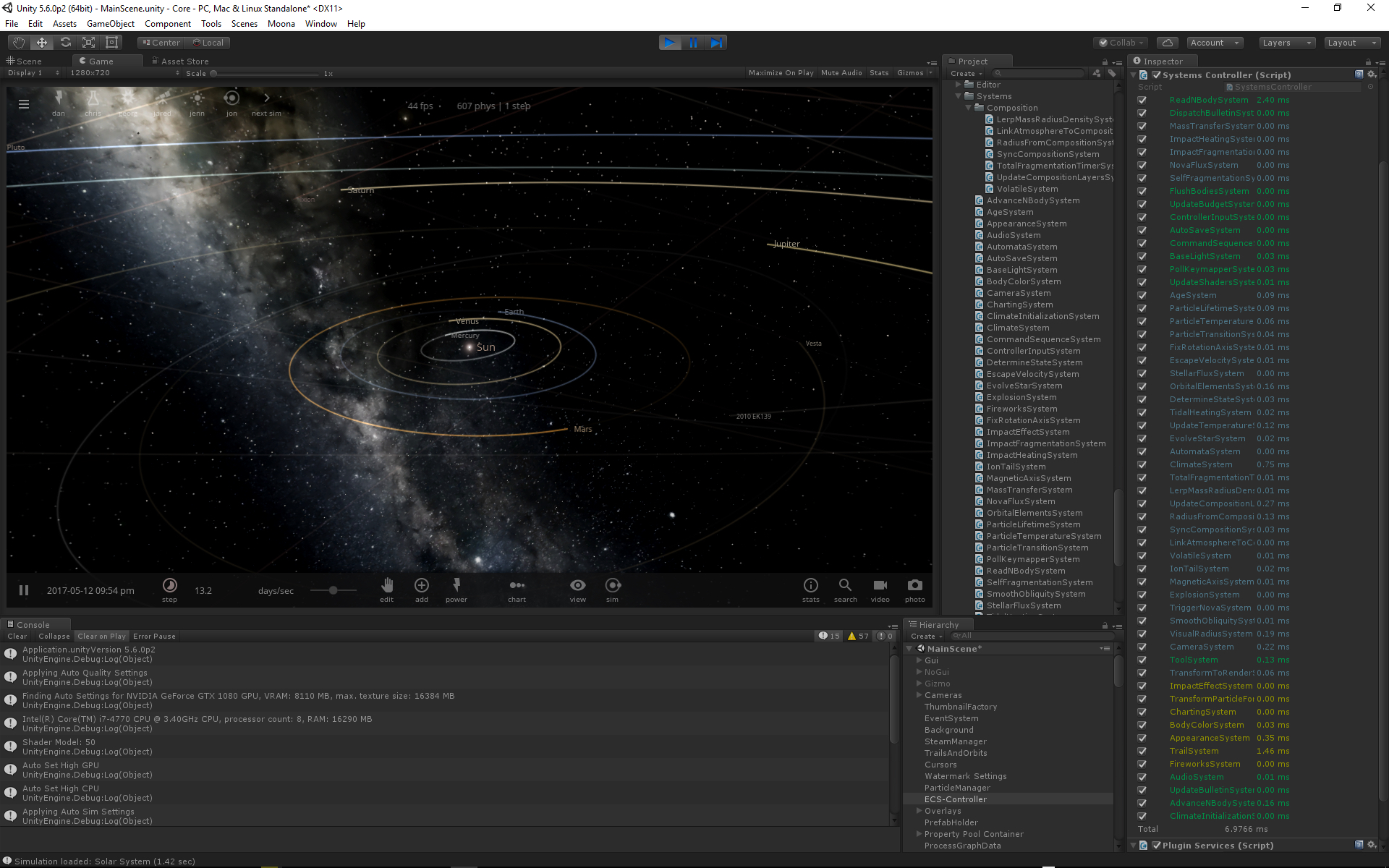
Our new code architecture in Update 20 is the other chunk of the replaced foundation. With this update, we’ve moved to a proper entity-component system, or ECS. Without getting too technical, this change is effectively a major reorganization that will make it easier for us to maintain our code, track down bugs, and develop and iterate on features.
Let’s compare our previous architecture to a tangled bundle of threads, where a system like temperature-control might twist and turn throughout and prove impossible to adjust or remove individually without messing with the rest of the bundle. With ECS, we’ve untangled and separated all the major systems which make Universe Sandbox ² run. Now we can take out a system, add a system, move a system around, whatever we like — the rest will remain intact.
The image above, taken in Unity, our development tool, shows a full list on the far right of our systems in place with ECS.
3. Disintegration, Teleportation, and a Lot More in VR
Update 20 VR is our first major VR update since we released it last year, and it’s a huge step up. First, it adds all the new simulation features, improvements, and fixes from the Disintegration desktop updates, including tidal forces, improved explosions, and the new fragment and particle system. There’s also a completely rewritten locomotion system for more responsive and smoother panning, scaling, and the all new rotation. To go along with this, there’s a new HUD interface that displays information automatically while scaling and rotating.
Make sure you check out the new Experience as well. The Experience will take you through a cinematic “What if…?” demonstration of Universe Sandbox ² VR.
Update 20 VR also marks the beginning of a unified Desktop/VR build, which will allow simulation improvements in the desktop version to be immediately available in the VR version as well. There is now also Save and Load support across Desktop and VR.
Teleportation
Tools > Teleport > Point at an object and pull trigger to instantly teleport to it
Rotation
Hold both grip buttons and move controllers around the center point between controllers
Experience
Menu (Vive) or B/Y (Rift) > Experience
4. Oculus Rift+Touch Support
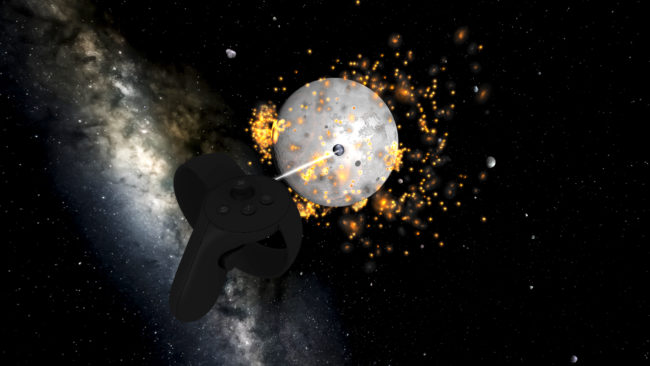
No need to explain this one. Unless you’re someone who owns an Oculus Rift+Touch and doesn’t yet own Universe Sandbox ². Then you’ll need to explain that one to your friends.
5. Dozens of Smaller Improvements and Fixes
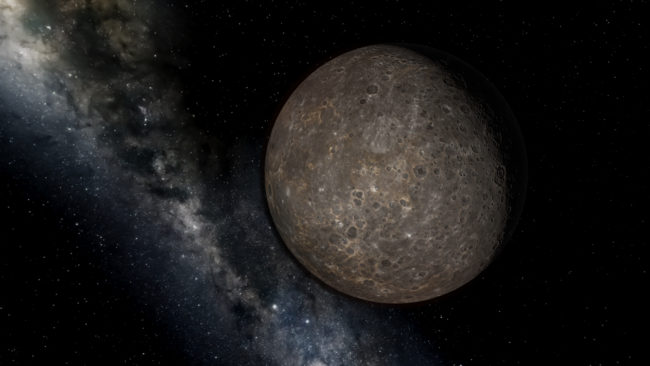
It wouldn’t be a big Universe Sandbox ² update without a pages-long list of improvements and bug fixes. Most notably, there’s a new Mercury texture, more cinematic control with camera smoothing and overlay settings, internal analytics, which will help us focus our efforts on making the best possible improvements to the user interface and user experience (these are anonymous; you may opt-out via Home > Settings > General > Allow Usage Statistics), a new Volume (quantity of space) property for objects, simulation stats for Mass Lost and Momentum Lost, and much more.
Camera Smoothing
Home > Settings > General > Camera Smoothing Multiplier
What’s coming next?
While these changes and new possibilities are exciting, we’re even more excited to move on to some big, new features again (it’s time for that indoor pool!). During our work on Update 20, we’ve made considerable progress on both planet-melting lasers and our rewritten stellar evolution model. They’re not ready for the spotlight just yet, but we’re now giving them our undivided attention. Also coming soon are some contributions to the improved foundation from Thomas, our physics programmer. His new physics system should introduce some substantial performance improvements as well as set the stage for rigid body collisions. Stay tuned!
Check out the full list of What’s New.
For the latest Universe Sandbox ² news, follow us on Twitter and Facebook.
Update 20 Patches
July 30: Updates 20.0.5-20.0.13 have fixed additional bugs with the user interface and simulation and added a warning message when the Time Step can no longer be increased.
June 26: Updates 20.0.1-20.0.4 have fixed the reported issues with the magnetic axis and magnetosphere, impact marks, clouds, database search in Add panel, and material cutaway
Voyager & Two Icy Moons | Alpha 19.7
Apr 19th
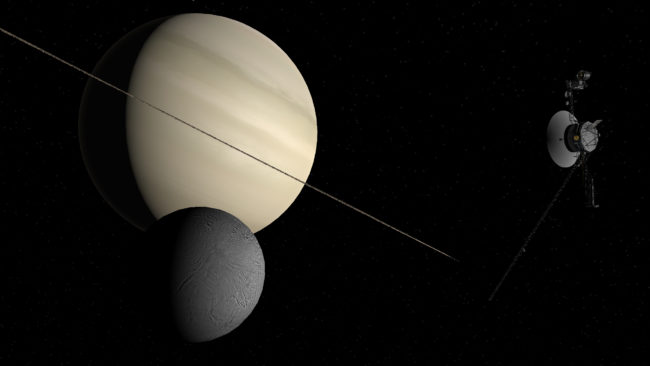
Alpha 19.7 is the last minor release before our next major planned update, Alpha 20, which has been in development since the beginning of the year.
Run Steam to update to Alpha 19.7, or buy Universe Sandbox ² via our website or the Steam Store.
In 1977, NASA launched the twin spacecraft Voyager 1 and 2 with the primary mission of exploring Jupiter and Saturn. The spacecraft sent back data and images that led to many discoveries about the two gas giants and their moons, rings, and magnetic fields. Then Voyager 2 went on to study Uranus and Neptune as Voyager 1 headed toward interstellar space. Today, the spacecraft continue to relay important scientific data as Voyager 2 explores the heliosheath and Voyager 1 heads farther than any human-made object in history.
Both Voyager 1 and 2 carry a copy of the famous “Golden Record.” These phonograph records contain a selection of images, sounds, and music meant to represent the breadth of life on Earth. As one of the curators for the record’s content, Carl Sagan noted, “The spacecraft will be encountered and the record played only if there are advanced spacefaring civilizations in interstellar space. But the launching of this bottle into the cosmic ocean says something very hopeful about life on this planet.”
Check out the new Voyager model and sims in Universe Sandbox ²:
Add > Objects > Voyager 1
Add > Objects > Voyager 2
Home > Open > Historical > Voyager 1 & Jupiter in 1979
Home > Open > Historical > Voyager 2 & Jupiter in 1979
Home > Open > Historical > Voyager 1 & Saturn in 1980
Home > Open > Historical > Voyager 2 & Saturn in 1981
Home > Open > Historical > Voyager 2 & Uranus in 1986
Home > Open > Historical > Voyager 2 & Neptune in 1989
Home > Open > Historical > Voyager 1 & 2 + Solar System in 2017

Another spacecraft, Cassini, entered Saturn’s orbit in 2004 to continue studying the planet and its moons. And on April 13, 2017, NASA announced that they found evidence in Cassini’s data for some of the ingredients for life on Saturn’s icy, ocean-bearing moon Enceladus. NASA will continue to study Enceladus and other “ocean worlds” in the ongoing search for signs of life beyond Earth.
Check out the new high-res texture for Enceladus:
Home > Open > Saturn & Moons
Add > Moons > Enceladus
Also included in 19.7 is a new high-res texture for Jupiter’s moon Callisto, along with a few small improvements and fixes.
Check out the full list of What’s New.
For the latest Universe Sandbox ² news, follow us on Twitter and Facebook.
TRAPPIST-1 & the Seven Planets | Alpha 19.6
Feb 23rd
Run Steam to update to Alpha 19.6, or buy Universe Sandbox ² via our website or the Steam Store.
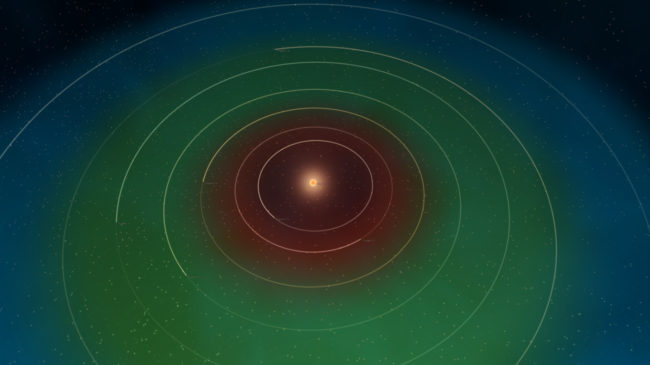
Welcome, TRAPPIST-1 system! NASA announced yesterday the discovery of seven Earth-sized planets orbiting the ultra-cool dwarf star, TRAPPIST-1.
Check out the new simulation of the TRAPPIST-1 system in Universe Sandbox ²:
Home > Open > Core tab > TRAPPIST-1
Three of the seven planets are within the star’s habitable zone, which means that they are in an area where rocky planets have the highest likelihood of having liquid water. This also means that they have a chance of supporting life as we know it.
The TRAPPIST-1 system is relatively close to us at about 40 light-years from Earth. It is named after The Transiting Planets and Planetesimals Small Telescope (TRAPPIST) in Chile, which discovered three of the planets announced in May 2016. Then in the fall of 2016, NASA’s Spitzer Space Telescope observed TRAPPIST-1 for 500 continuous hours, confirming the original discovery and uncovering the rest of the seven planets. This is the greatest number of potentially habitable planets ever discovered around a single star.
All seven of the planets have orbits closer to their star than Mercury is to the Sun. Scientists suspect that, because of these tight orbits, they are all likely tidally-locked, as well. This means that the same side of the planet always faces the star, just as one side of the Moon always faces the Earth. But despite this proximity and being tidally-locked, they all have a chance of harboring liquid water due to the parent star’s very low temperature. Scientists say this system is a promising place to search for life, and they will continue to observe the system and its planets.
Check out the full list of What’s New.
For the latest Universe Sandbox ² news, follow us on Twitter and Facebook.