


Archive for August, 2025

10-Year Steam Launch Anniversary
Aug 21st
The 10-year anniversary of Universe Sandbox’s Early Access launch on Steam is this Sunday, August 24, 2025!
To celebrate this milestone, Universe Sandbox will be on sale now until August 28.
Over the last 10 years, we’ve added so many new features to make Universe Sandbox better than ever, from simulating liquids and gases flowing over planet surfaces and lasers in 2019, to realistically simulating planet atmospheres and accurately terraforming planets in 2023, and our major graphics update just a few months ago.
And we have so much planned. We’re currently working on
- Improving collisions with more realistic friction and craters and simulating atmospheric drag, which allows meteors to burn up in the atmosphere.
- Adding basic life simulation where life grows, dies, and can be eaten.
- Bringing Universe Sandbox to phones and tablets (iOS & Android).
Our long-term goals stretch years into the future and include
- Detailed planet surface so you can fly over mountains and through canyons.
- More planet customization with custom maps or images, like a picture of your dog.
- Colliding everyday objects, including simple shapes like dice and complex shapes like spacecraft, according to their unique forms instead of as spheres, also called rigid-body physics.
- And so much more!
Learn about what we’re currently working on in our 2025 Roadmap post.
We’re incredibly grateful that we’ve been able to continue developing and improving Universe Sandbox over the last decade, and we’re humbled by the ongoing support of our community. Thank you all for giving us the opportunity to make this crazy game.
We’re proud of what we’ve accomplished since Universe Sandbox was first released on Steam in Early Access 10 years ago, and we’re so excited about everything that’s still to come.
– The Universe Sandbox Team

Another Interstellar Visitor | Update 35.3
Aug 20th

Watch the third-ever discovered visitor from outside our Solar System, 3I/ATLAS, fly past the Sun and see how it compares it to other known interstellar interlopers. We’ve also improved the view that shows what parts of the surface of a planet are illuminated, updated our scientific notation, and more!
In the Light of Day
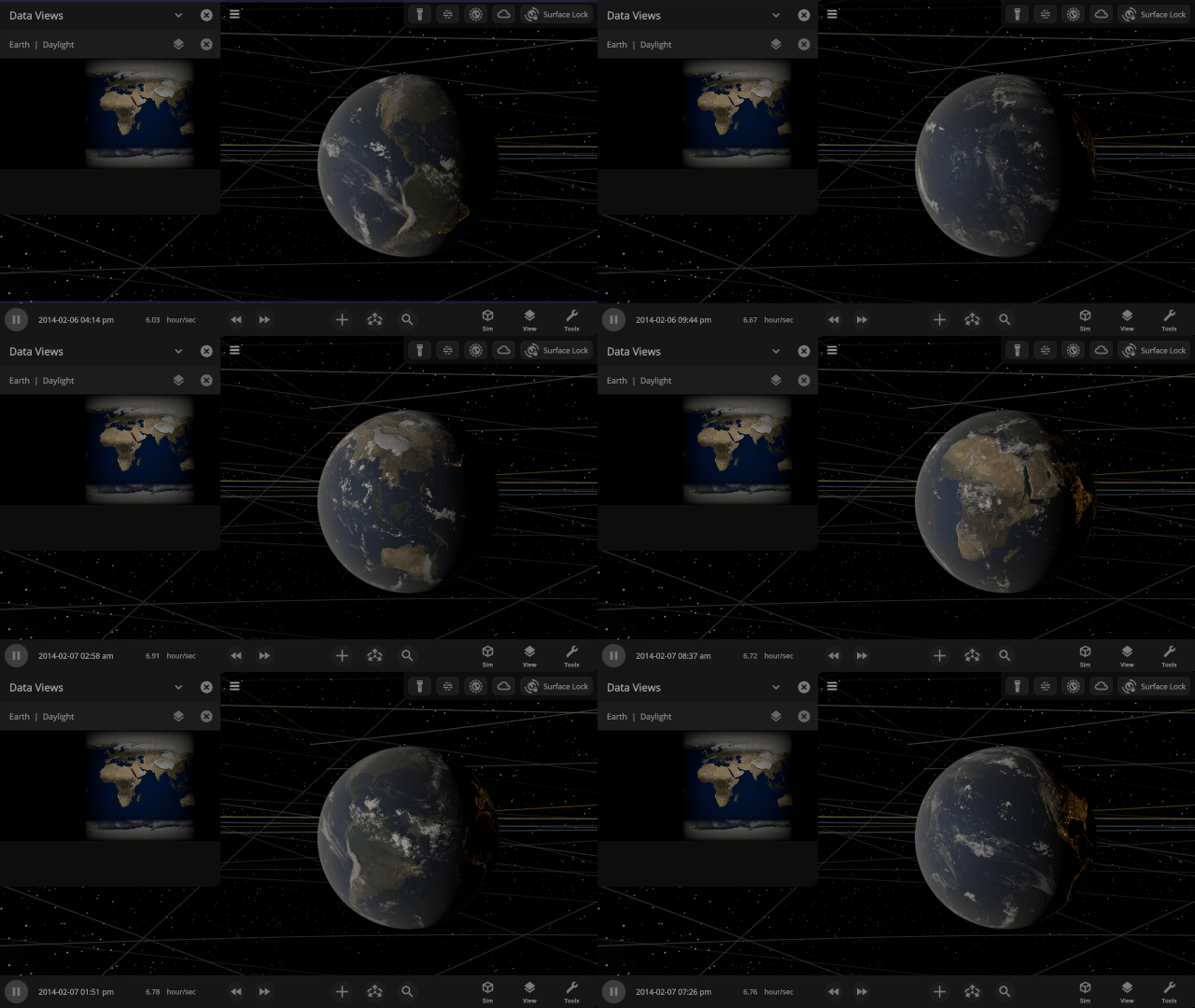
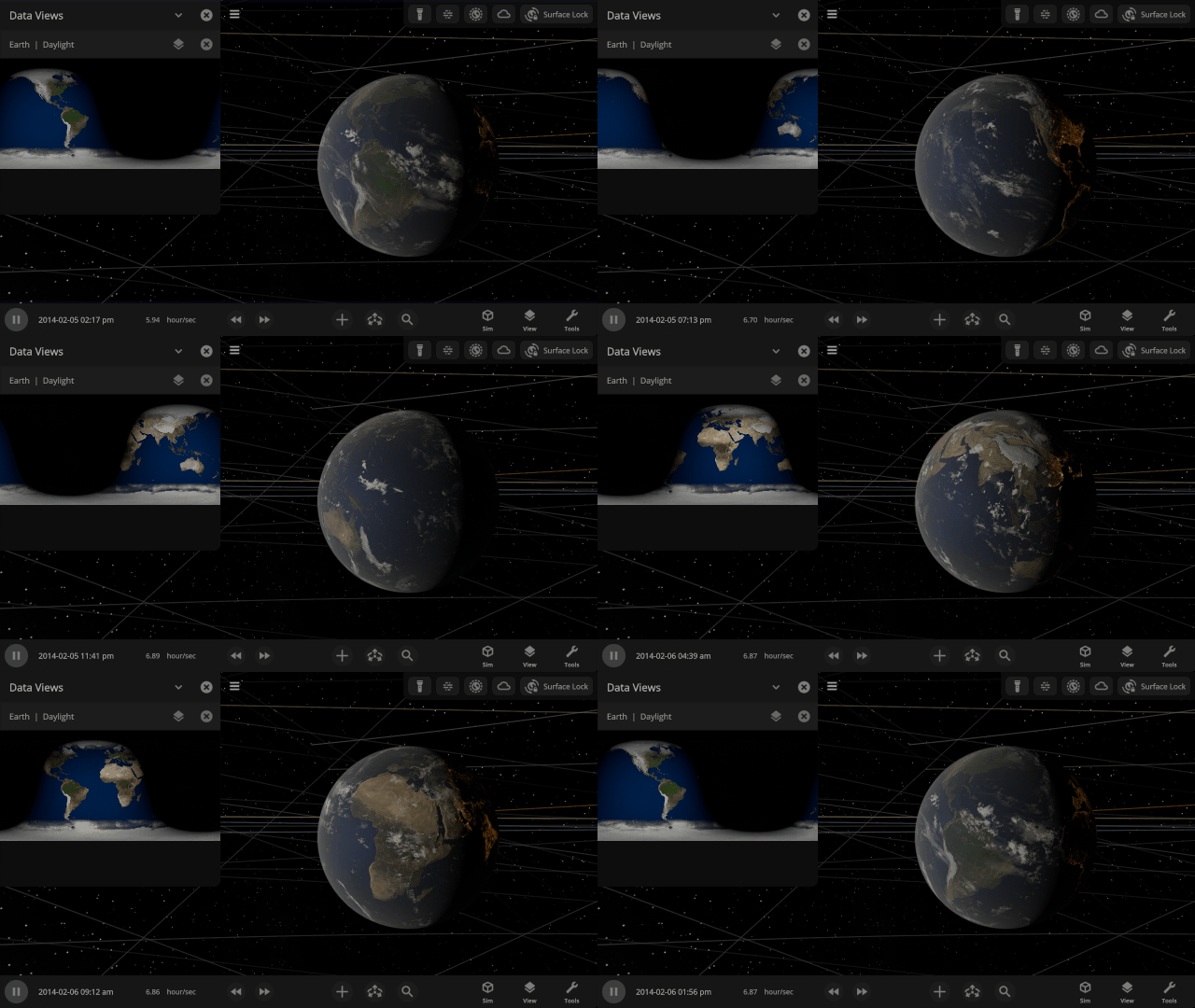
The Daylight view now shows surface illumination of a planet in real-time as the object rotates and orbits within the simulation. Previously it was a static snapshot of the daylight on a planet.
Comets from Beyond the Solar System
Watch the comet 3I/ATLAS, the third-ever discovered interstellar visitor to our Solar System, pass by on its journey through space and compare the trajectories of all three known interstellar visitors. Find them under
Home > Open > Interstellar Comet 31/ATLAS
Home > Open > Interstellar Object Trajectory Comparison


Scientific Notation
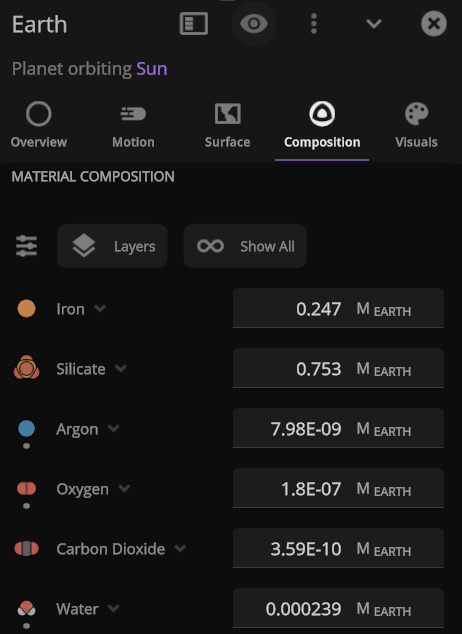
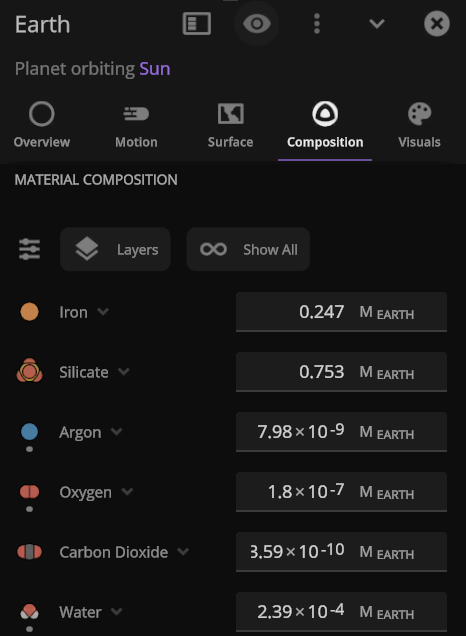
Astronomically large (and small) numbers are already hard to understand, so we’ve updated our scientific notation to be friendlier: “1 × 10#” (previously we used “1E+#”). Try changing Earth’s mass to 1×10^6 Earth masses and see what happens to the Solar System.
More Highlights
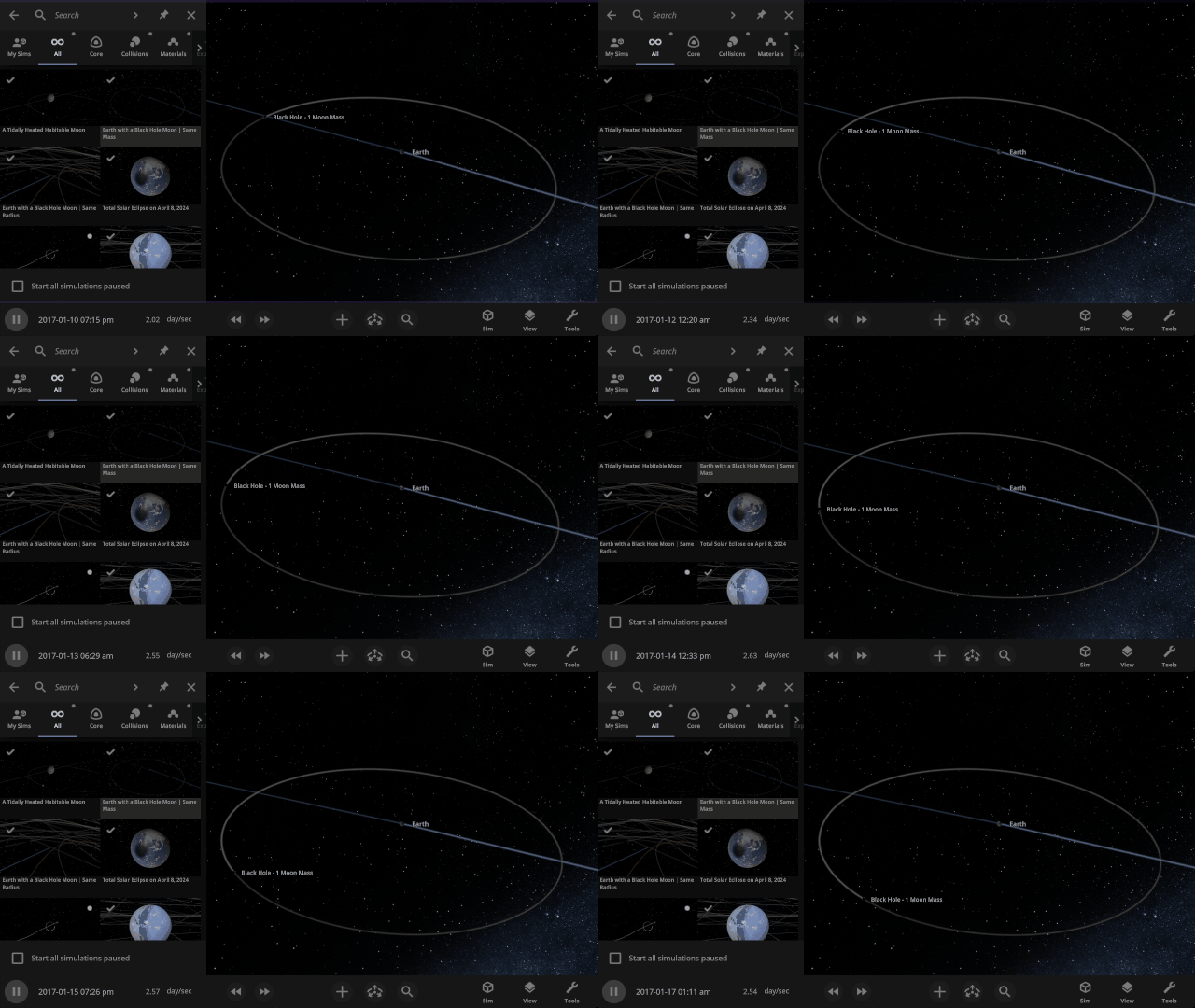
Watch what would happen to Earth if the Moon were replaced with a black hole of the same mass or the same radius. Which simulation do you think will be more destructive? Check them out under
Home > Open > Earth with a Black Hole Moon | Same Mass
Home > Open > Earth with a Black Hole Moon | Same Radius
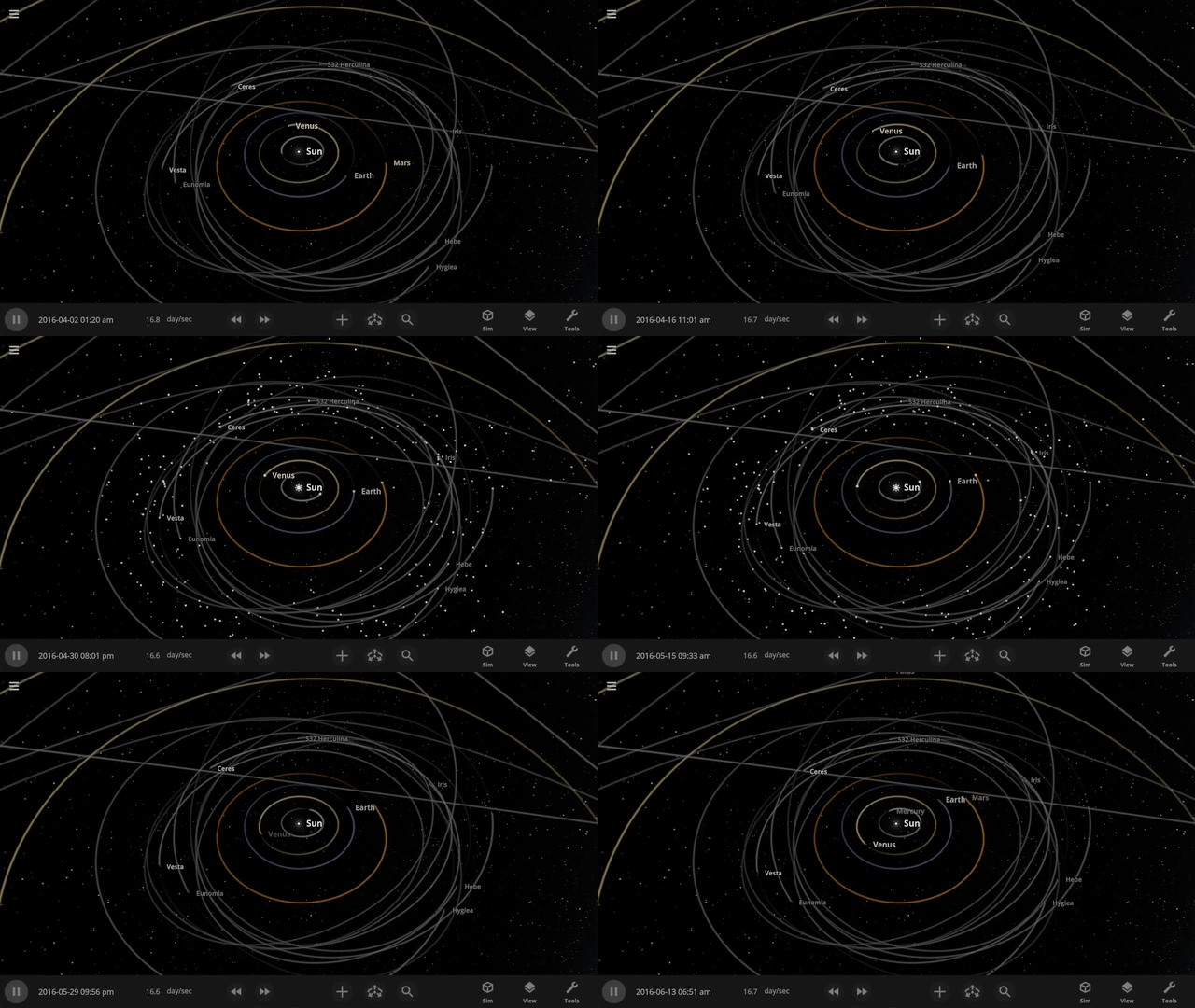
See small objects in your simulation even faster by turning on Markers by pressing “m” (previously “i”) on your keyboard. No need to go all the way to View > Markers.
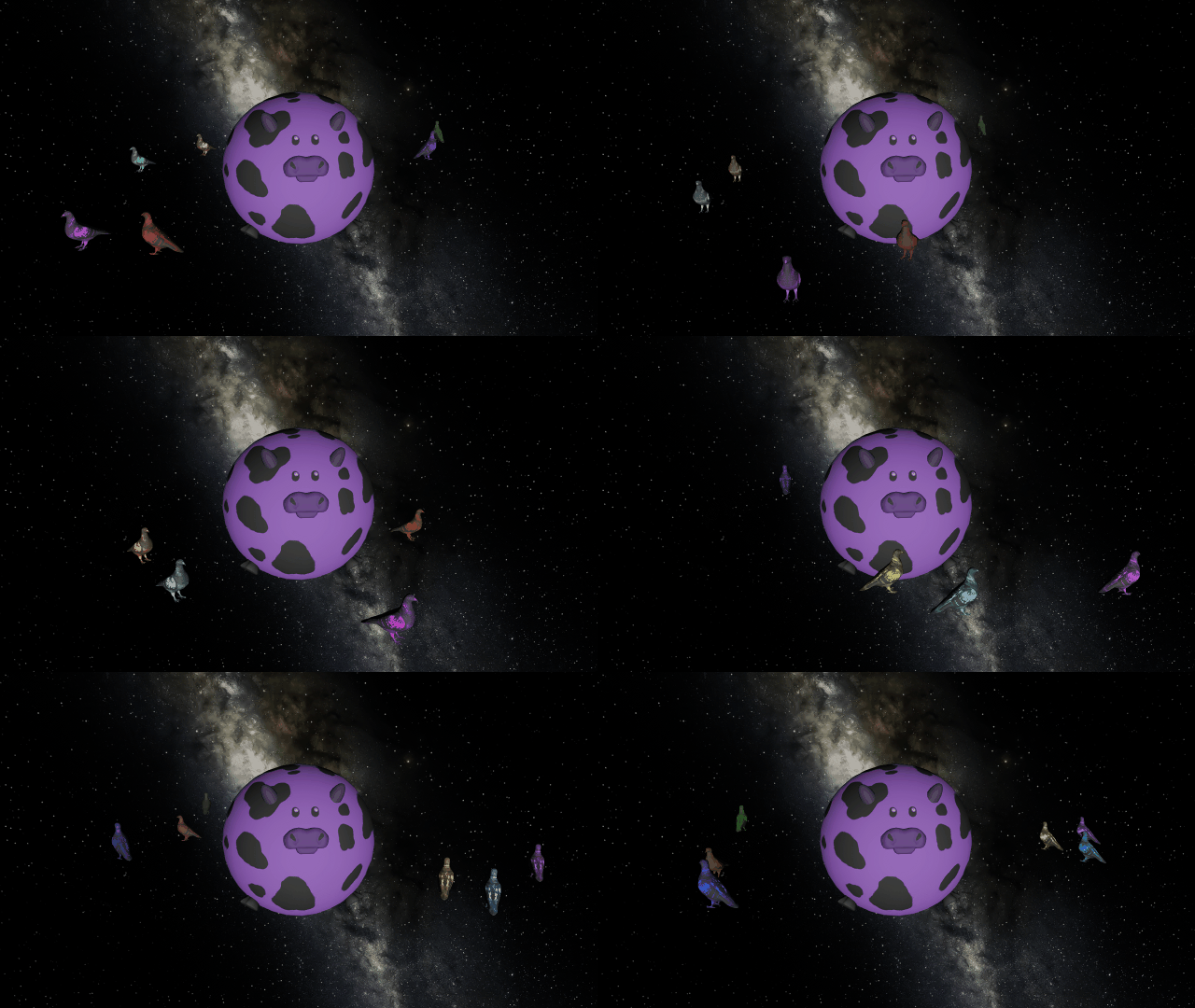
You can once again add custom colors to your human scale objects to make purple cows and a pigeon rainbow.
Check out the full list of What’s New in Update 35.3.
Please report any issues on our Steam forum, on Discord, or in-game via Home > Send Feedback.